Self-Reliance
Ralph Waldo Emerson. The Transcendentalist essay behind the whole movement: trust the voice within over custom and opinion.
We’re at the dawn of a new era. For a century, people were trained to work like machines; now we’re teaching machines to think like people. New Thought teaches the optimism and creativity this moment calls for, and this library is the place to begin.
“Trust thyself: every heart vibrates to that iron string.” Ralph Waldo Emerson, Self-Reliance, 1841
The industrial age asked people to behave like robots. The age of AI is teaching robots to behave like humans. The people who thrive next will be the ones who can think creatively alongside these new tools.
Most of us aren’t there yet. We live in a constant, anxious, always-on state (what brain researchers call high beta), with little room for the calm, open focus where creativity happens. So the new era feels frightening instead of full of opportunity. That isn’t anyone’s fault. Most of us were never taught to think in a way that makes change exciting.
New Thought teaches exactly that: how to stay optimistic, how to direct the mind, and how to create from within. This site is the first step.
— Travis Ahern, founder · My story
New Thought never had one creed, and its schools disagreed on much. These convictions are what they shared.
God, or Spirit, is present everywhere and holds all power. Spirit is the ultimate reality; matter is its expression.
Each person shares in that divine nature. Thought attuned to it is a real force for good.
Our mental states carry forward into experience. Illness begins in the mind, so right thinking can heal.
Understanding keeps growing. New Thought sees itself as a process, open to new insight, more than a fixed doctrine.
New Thought sits at the center, with the self-development, business, and spiritual books that grew up around it. Books marked “Free” are in the U.S. public domain and link to free editions; the rest link to the audiobook.
The mind-cure classics and the modern teachers who carried them forward.
Ralph Waldo Emerson. The Transcendentalist essay behind the whole movement: trust the voice within over custom and opinion.
Warren Felt Evans. The first book to set out mental healing as a system, blending Quimby with Swedenborg.
H. Emilie Cady. Unity's foundational textbook: clear, devotional lessons on denial, affirmation, and faith.
Ralph Waldo Trine. The bestseller that carried New Thought to a mass audience, on living in conscious union with the divine.
James Allen. A short, luminous meditation on thought as the root of character and circumstance.
Thomas Troward. A retired judge reasons, step by step, from universal mind to personal creative power.
Wallace D. Wattles. A compact, practical method for prosperity through clear vision, gratitude, and action.
Charles F. Haanel. Twenty-four weekly lessons on concentration and visualization, first sold as a correspondence course.
Genevieve Behrend. Troward's only personal pupil turns his philosophy into a daily practice of visualization.
Florence Scovel Shinn. Brisk stories and affirmations from a New York illustrator turned metaphysical teacher.
Ernest Holmes. The full synthesis of mental science and spiritual philosophy behind Religious Science.
Robert Collier. A popular course on the creative power of desire and belief, written by a direct-mail copywriter.
Emmet Fox. A few pages on turning your attention to God instead of the problem. Fox's best-loved teaching.
Neville Goddard. Neville's short guide to assuming the feeling of the wish fulfilled, especially before sleep.
Neville Goddard. The “I AM” teaching in full: your awareness of being is the creative power.
Joseph Murphy. The mid-century bestseller that put mental science in plain language for millions of readers.
Mitch Horowitz. A historian's account of how positive thinking moved from the fringe to the center of modern life.
Character, discipline, and the practical psychology of a better life.
Frederick Van Rensselaer Dey. A short parable about a struggling artist who finds an old manuscript that changes his outlook.
Roy Herbert Jarrett. A booklet you can read in half an hour: write down what you want, read it often, and tell no one.
Napoleon Hill. Hill's sixteen-lesson course, from the Master Mind to the Golden Rule. The groundwork for Think and Grow Rich.
Dale Carnegie. Practical, story-driven methods for setting worry aside and living a day at a time.
Norman Vincent Peale. The minister's bestseller on faith, affirmation, and confident expectation.
Earl Nightingale. The spoken-word recording that distilled success into a single line: we become what we think about.
Tony Robbins. Robbins on decisions, beliefs, and the emotional habits that steer a life.
T. Harv Eker. How a “money blueprint” formed in childhood shapes your financial results, and seventeen “wealth files” for rewriting it.
Greg McKeown. The disciplined pursuit of less: do fewer things, and do them better.
David Goggins. A memoir and challenge from a former Navy SEAL on callusing the mind.
Jerremy Alexander Newsome. Trader and educator Jerremy Newsome on reshaping your thoughts and beliefs about money so real wealth feels possible.
Brianna Wiest. On self-sabotage as a signal, and turning it into self-mastery.
Joseph Nguyen. A short book arguing that suffering comes from thinking about our thoughts.
Building companies, creating value, and thinking clearly about money.
Russell H. Conwell. The famous lecture on finding opportunity where you already stand. It helped fund Temple University.
Jim Collins & Jerry I. Porras. What lasting, visionary companies have in common, drawn from years of research.
Michael E. Gerber. Why most small businesses stall, and how to work on your business instead of in it.
Simon Sinek. Leaders who inspire begin with purpose before product.
Derek Sivers. Forty short lessons from the founder of CD Baby on building a business your own way.
Walter Isaacson. The authorized biography of Apple's co-founder.
Peter Thiel with Blake Masters. On building something new, and why the best startups aim for monopoly.
Stephen A. Schwarzman. The Blackstone co-founder's lessons from building a global firm.
Morgan Housel. Short essays on why behavior matters more than intelligence in building wealth.
Dan Martell. A system for founders to hire and delegate their way out of the daily grind.
Dan Sullivan & Benjamin Hardy. Why aiming far higher can simplify your work instead of adding to it.
Patrick Bet-David. Business planning built around purpose, rivals, and a clear picture of your future self.
Mysticism, esoteric traditions, and the study of consciousness.
Sir Edwin Arnold, translator. Arnold's verse translation of the Gita, which brought it to many Western readers.
Three Initiates. Seven Hermetic principles, from “The All is Mind” to cause and effect, with deep ties to New Thought.
Manly P. Hall. Hall's huge survey of Hermetic, Masonic, Rosicrucian, and Qabbalistic symbolism.
Robert Monroe. A businessman's first-hand record of out-of-body experiences; he later founded the Monroe Institute.
Paulo Coelho. A fable about a shepherd boy who follows his dream, and the signs along the way.
Marianne Williamson. Reflections on the principles of A Course in Miracles.
Don Miguel Ruiz. Four simple vows from Toltec wisdom for personal freedom.
Russell Targ. A physicist's account of remote viewing research and what it suggests about consciousness.
Mitch Horowitz. The hidden history of séances, mystics, and alternative faiths in American life.
Haemin Sunim. Gentle reflections from a Korean Zen teacher on calm and mindfulness.
Where to Begin is our free reading guide: what New Thought teaches, four reading paths, and how to read the classics well. Subscribe and it arrives in your inbox.
Public domain status differs by country. Free links open a search at the Internet Archive; audiobook links open Audible titles on Amazon. As an Amazon Associate I earn from qualifying purchases.
Complete public-domain texts in a calm, distraction-free reading edition: chapters, adjustable text size, and it remembers where you left off.
New Thought writing ranges from one-hour pamphlets to dense metaphysics. Each path below is ordered from gentle to demanding.
Short books you can finish in a sitting. A good introduction to the tone of the whole movement.
The original concern of the movement: how belief and attention affect the body.
The prosperity writers, read in the order their ideas developed.
The mid-century teacher of “assuming the feeling of the wish fulfilled.”
Short pieces on why these books matter now, how to read them well, and what they actually say.
Why a set of hundred-year-old books matters more in the age of AI, not less.
We are at the start of something new. For most of the last century, work asked people to behave like machines: repeat the task, follow the rule, don’t think too much. Now we are teaching machines to behave like people. The tasks that once made us useful are being handed to software, and what is left for us is the part machines can’t do on their own: imagine, create, connect, decide.
That should be exciting. For a lot of people it’s frightening instead. Most of us spend our days in a tense, always-on state, reacting to the next notification and the next worry. Creativity doesn’t live there. It lives in a calmer, more open state of mind, the kind you reach in quiet focus, in meditation, or in flow. Very few of us were ever taught how to get there on purpose.
The New Thought writers were teaching exactly that more than a hundred years ago. Emerson told us to trust the voice within. James Allen showed that thought shapes character and circumstance. Troward explained how a settled picture in the mind becomes action in the world. Their message is simple: you are not stuck with the mind you were handed. You can direct it, and you can create through it.
I didn’t come from anything, and nothing was handed to me. What changed my life was learning to change the way I talked to myself. I believe the biggest problem in the world right now is self-talk: millions of capable people who don’t believe they can do great things. Entrepreneurs solve problems. This is the one I want to help solve.
So start here. Read one of the short classics in the Reading Room. Notice how it changes the way you think for a day. Then read another. The new era belongs to people who can stay optimistic and creative, and that is a skill anyone can learn.
Before the name, there was “mind cure,” “mental science,” and a great deal of argument.
For most of the nineteenth century the people we now call New Thought writers did not share a name. Followers of Phineas Quimby spoke of “mind cure.” Others used “mental healing,” “mental science,” or “divine science,” and several of those labels became the names of rival schools.
“New Thought” took hold in the 1890s as an umbrella term broad enough to hold them all. It suited a movement with no single founder, no creed, and no central church: only a shared conviction that thought is causal, that the divine is present in each person, and that right thinking can change one's health and circumstances. Adherents saw their ideas as the successor to “ancient thought.” In England, “Higher Thought” was the preferred name at first.
That looseness is why the literature is so varied. Unity's writers were devotional and Christian. Troward wrote like a lawyer, which he had been. Atkinson wrote fast and under many names. Reading across them, you see a family resemblance rather than a doctrine.
The Edinburgh Lectures reward patience. A method for getting through them.
Thomas Troward was a retired judge of the Punjab, and his lectures read like legal argument. Each chapter builds a single proposition from first principles, and if you skim one, the next will not make sense.
Read one lecture per sitting, never more. When you finish, write down the one sentence you think the chapter was proving. Troward's two central terms, the “objective mind” and the “subjective mind,” carry most of the weight, so keep a note of how he uses each one as you go.
Then read Genevieve Behrend's Your Invisible Power. She studied with Troward personally, and her short book translates his abstractions into daily practice. Many readers find that Troward only makes sense the second time, after Behrend.
The modern Law of Attraction borrows from these books, but leaves a lot behind.
Wallace Wattles' The Science of Getting Rich is a direct ancestor of today's manifesting culture, and it does promise that clear, steady thought brings results. But Wattles insists just as firmly on gratitude, on giving more in use-value than you take in money, and on acting fully in the present job you already have.
James Allen goes further. In As a Man Thinketh, the point of right thought is character, and circumstances matter mainly because they reveal it. Ralph Waldo Trine places the whole subject inside a sense of union with the divine.
Read in full, the classics describe a discipline of attention and conduct. The wish list is a small part of it.
From a clockmaker's healing practice in Maine to a set of churches, magazines, and an international alliance.
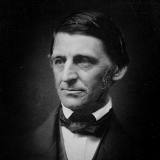
“Self-Reliance” and “The Over-Soul” give later writers their language of the indwelling divine.
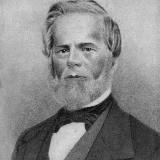
Phineas Parkhurst Quimby treats patients by talking through the beliefs he thinks cause their illness.
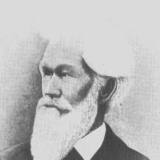
Warren Felt Evans, who had visited Quimby for treatment, writes the first systematic book on mental healing.
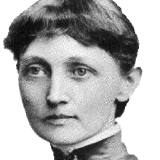
Called the “teacher of teachers,” she trains many of the founders of the movement's churches.
Malinda Cramer and Nona L. Brooks build one of the earliest New Thought denominations, centered in Denver.
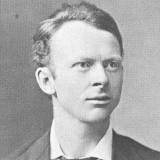
Charles and Myrtle Fillmore start their magazine in Kansas City; it grows into the Unity movement.
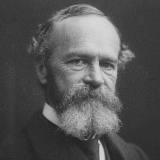
In The Varieties of Religious Experience, James treats New Thought as one movement despite its many sects.
The scattered schools form a common association, which continues today.
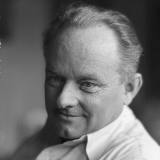
Ernest Holmes publishes his textbook; a year later he founds the Institute of Religious Science.
A short reading from the library each Sunday morning, with a line or two of context. New subscribers also get Where to Begin, our free reading guide.
New Thought Literature collects the founding books of the New Thought movement and makes them easy to find, read, and understand. We favor original texts over summaries, and context over hype.
The library grows slowly. If there is a book you think belongs here, or an edition worth pointing to, we would like to hear about it. Who runs this site →