Four ideas run through every book here
New Thought never had one creed, and its schools disagreed on much. These convictions are what they shared.
Infinite Intelligence
God, or Spirit, is present everywhere and holds all power. Spirit is the ultimate reality; matter is its expression.
Divine selfhood
Each person shares in that divine nature. Thought attuned to it is a real force for good.
Mental causation
Our mental states carry forward into experience. Illness begins in the mind, so right thinking can heal.
Continuous revelation
Understanding keeps growing. New Thought sees itself as a process, open to new insight, more than a fixed doctrine.
How the movement grew
From a clockmaker's healing practice in Maine to a set of churches, magazines, and an international alliance.
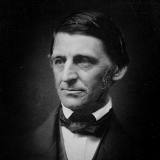 Emerson publishes Essays: First Series
“Self-Reliance” and “The Over-Soul” give later writers their language of the indwelling divine.
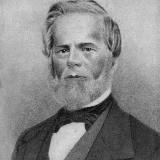 Quimby opens his Portland practice
Phineas Parkhurst Quimby treats patients by talking through the beliefs he thinks cause their illness.
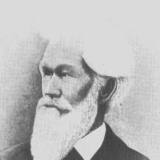 The Mental Cure
Warren Felt Evans, who had visited Quimby for treatment, writes the first systematic book on mental healing.
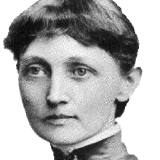 Emma Curtis Hopkins teaches in Chicago
Called the “teacher of teachers,” she trains many of the founders of the movement's churches.
- Divine Science is founded
Malinda Cramer and Nona L. Brooks build one of the earliest New Thought denominations, centered in Denver.
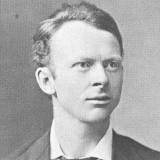 Unity begins
Charles and Myrtle Fillmore start their magazine in Kansas City; it grows into the Unity movement.
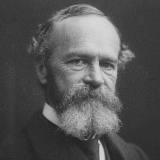 William James names the “mind-cure movement”
In The Varieties of Religious Experience, James treats New Thought as one movement despite its many sects.
- International New Thought Alliance
The scattered schools form a common association, which continues today.
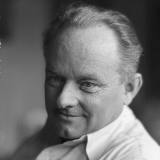 The Science of Mind
Ernest Holmes publishes his textbook; a year later he founds the Institute of Religious Science.
One passage, once a week
A short reading from the library each Sunday morning, with a line or two of context. New subscribers also get Where to Begin, our free reading guide.